About South Africa
An Overview of South Africa
South Africa, often referred to as the Rainbow Nation, is a vibrant and diverse country located at the southern tip of the African continent.
With a rich tapestry of cultures, languages, and traditions, South Africa stands out as an exceptional travel destination that offers visitors a unique experience. The nation is home to eleven official languages, reflecting the multitude of ethnic groups that coexist harmoniously within its borders. This diversity is not only a source of national pride but also an attractive feature for travelers who seek to immerse themselves in various cultural practices and histories.
The historical significance of South Africa cannot be understated, with its past woven through a complex narrative that includes the indigenous populations, colonial influences, and the struggle for democracy. Sites like Robben Island, the former prison of Nelson Mandela, and the Cradle of Humankind, a UNESCO World Heritage Site, testify to the country’s pivotal roles in both human history and the fight for equality. Such landmarks draw millions of tourists each year, eager to learn more about the remarkable journey that shaped the nation's identity.
In addition to its historical importance, South Africa boasts stunning landscapes, ranging from the iconic Table Mountain in Cape Town to the breathtaking Panorama Route in Mpumalanga. Each region showcases a variety of natural beauty that complements its rich cultural heritage. The influx of tourists also emphasizes South Africa's appeal as a destination for those seeking adventure, wildlife encounters, and natural wonders. As we embark on this exploration of South Africa's top attractions, we will delve into the diverse offerings that make this captivating nation an exceptional choice for travelers from around the globe.
Natural Wonders: Majestic Landscapes and Wildlife
South Africa is renowned for its stunning natural beauty, characterized by a diverse range of landscapes, ecosystems, and an abundance of wildlife. One of the most significant showcases of this natural wonder is Kruger National Park, spanning over 7,500 square miles. This iconic park is home to the "Big Five": lions, leopards, elephants, buffaloes, and rhinoceroses, attracting millions of visitors annually. Wildlife enthusiasts can explore the park through guided safaris, offering a unique opportunity to witness animals in their natural habitat, enhancing the experience for those interested in biodiversity and nature conservation.
In addition to Kruger, Table Mountain stands as an iconic symbol of Cape Town and a prominent landmark of natural beauty. This flat-topped mountain is part of the Table Mountain National Park, where visitors can hike up various trails or take a cable car ride to the summit for panoramic views of the city, coast, and surrounding mountains. The rich flora and fauna found here include over 2,200 plant species, making it a hotspot for botanists and nature lovers alike. Its proximity to urban life combined with serene natural surroundings makes Table Mountain a unique destination.
The Garden Route, which stretches along the southern coast, is another of South Africa’s treasured natural landscapes. This scenic route encompasses lush forests, rugged cliffs, golden beaches, and lagoons. Visitors can engage in numerous outdoor activities such as hiking, bird watching, and whale watching during migration seasons. The Garden Route National Park is a prime location for adventure seekers, offering well-maintained trails and opportunities to encounter wildlife. With such a variety of exceptional national parks and wildlife reserves, South Africa is undoubtedly a top destination for anyone seeking to immerse themselves in magnificent natural environments.
Cultural Experiences: Embracing South African Heritage
South Africa boasts a tapestry of cultures, reflecting its complex history and diverse communities. Visitors seeking to immerse themselves in the country’s rich heritage can explore a multitude of cultural attractions that illuminate its past and present. One of the most significant sites is Robben Island, a UNESCO World Heritage site known as the prison where Nelson Mandela was incarcerated for 18 years. Guided tours conducted by former political prisoners provide invaluable insights into the harsh realities of apartheid and the struggle for freedom, allowing guests to connect deeply with South Africa's historical narrative.
Another remarkable destination is the Cradle of Humankind, also a UNESCO World Heritage site. This area is renowned for its fossil discoveries and significance to human evolution, showcasing the origins of humankind. Visitors can take guided tours that navigate the sprawling limestone cave systems, where ancient hominid remains have been found. Engaging with knowledgeable guides allows tourists to appreciate the archaeological importance while contemplating the incredible story of human history that unfolded in this region.
Beyond these historical landmarks, the vibrant cultural villages across South Africa provide opportunities for direct interaction between visitors and local communities. For instance, places such as the Lesedi Cultural Village offer traditional music, dance, and crafts, showcasing various ethnic groups such as the Zulu, Xhosa, and Sotho. These immersive experiences foster an appreciation for the diverse heritage of South Africa and encourage meaningful exchanges that deepen the understanding of daily life within these communities. Travelers are encouraged to actively participate in the rituals and customs, which serve as a bridge between cultures.
These cultural experiences not only illuminate the complexities of South African heritage but also create lasting memories that resonate with visitors long after they leave. By understanding the significance of these sites, tourists become part of a larger narrative that celebrates resilience, unity, and the vibrant spirit of the Rainbow Nation.
Urban Adventures: Life in South Africa's Major Cities
South Africa is renowned for its vibrant urban life, which is exemplified in its major cities: Cape Town, Johannesburg, and Durban. Each city offers a unique blend of modern attractions, cultural diversity, and an exhilarating nightlife that draws both locals and visitors alike.
In Cape Town, one cannot overlook the stunning landscapes of the Cape Winelands. This picturesque region, just a short drive from the city, boasts world-class vineyards and charming towns such as Stellenbosch and Franschhoek. Visitors can indulge in wine tastings, gourmet dining, and breathtaking views of the surrounding mountains. Additionally, the iconic Table Mountain provides numerous hiking opportunities, rewarding adventurers with stunning vistas over the city and its coastline.
Johannesburg, the largest city, serves as a dynamic hub of culture and commerce. A must-see area is the Maboneng Precinct, an urban renewal project that showcases a vibrant arts scene, trendy eateries, and charming boutiques. The precinct reflects the innovative spirit of the city and offers plenty of entertainment options, from street markets to live music events. Furthermore, a visit to the Apartheid Museum is essential for those seeking to understand the country’s complex history.
In contrast, Durban's coastal charm is highlighted by its stunning beaches along the KwaZulu-Natal coast. The Golden Mile, a popular beachfront promenade, is ideal for sunbathing, surfing, and enjoying an array of vibrant local eateries. Durban is also renowned for its unique culinary offerings, where the fusion of Indian and African flavors delivers a delightful experience for food enthusiasts.
These cities, each with their distinct character, encapsulate the essence of urban life in South Africa. The seamless blend of attractions, nightlife, and gastronomy contributes to an exciting atmosphere, ensuring that visitors have an unforgettable experience exploring the Rainbow Nation's urban landscape.
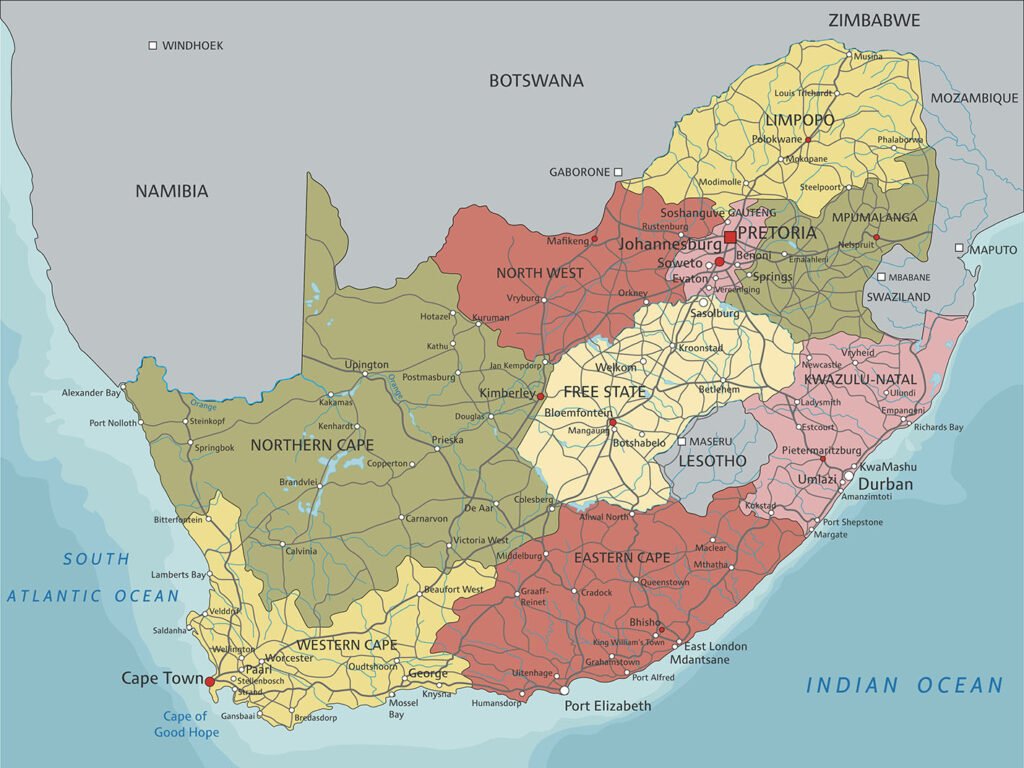
Map of South Africa