
FAQs
South Africa offers everything from mountain peaks and canyon views to museums about apartheid and protected wildlife areas. Visitors can explore penguin colonies, ride luxury trains, watch whales from coastal cliffs, and walk through caves where ancient human fossils were found.
What are the must-visit natural landmarks in South Africa?
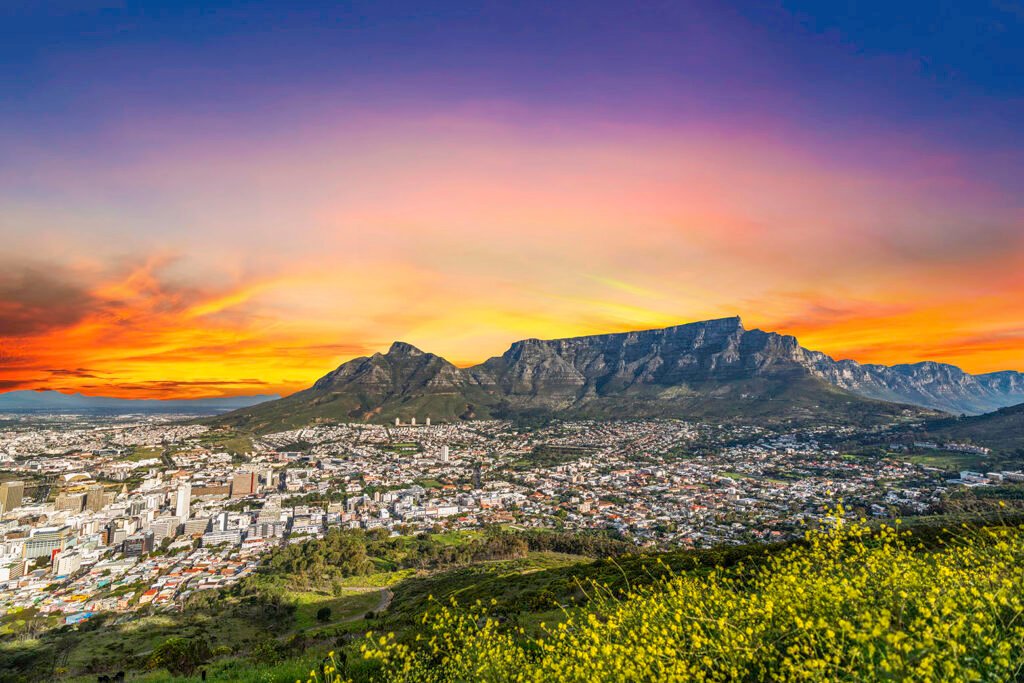
Table Mountain stands as Cape Town's most famous natural site. The Cableway takes visitors to the summit in less than five minutes, where they can see 360-degree views of the city and coastline.
Blyde River Canyon stretches 26 kilometers through Mpumalanga province. The canyon features waterfalls, subtropical forests, and viewpoints like God's Window and Pinnacle Rock. The Three Rondavels rock formations create one of the canyon's most recognizable features.
Cape Agulhas marks the southernmost point of Africa where the Atlantic and Indian oceans meet. A red-and-white lighthouse built in 1849 still stands at this location. Visitors can walk along a boardwalk and explore rock pools near the shore.
The Namaqua region transforms each spring when thousands of wildflowers bloom across the semi-desert landscape. This happens in August and September after the winter rains. The area contains roughly 5,000 plant species, with many found nowhere else in the world.
Which cultural heritage sites in South Africa should not be missed?
The Apartheid Museum in Johannesburg documents the rise and fall of South Africa's racist system through photos, videos, and artifacts. The museum opened in 2001, just seven years after multiracial elections began. Visitors enter through racially-segregated doors to experience part of what life was like during this period.
Robben Island served as a prison where Nelson Mandela spent 18 years locked up. Former political prisoners now lead tours through the cell blocks and explain what daily life was like for inmates. Ferries run from the Victoria and Alfred Waterfront to reach the island.
The Cradle of Humankind contains the world's largest collection of human ancestral remains. The site includes 200 caves and multiple fossil locations. Visitors can tour the Sterkfontein Caves where scientists discovered ancient skeletons like "Little Foot" and "Mrs. Ples."
What are the top wildlife reserves for safaris in South Africa?
Kruger National Park remains South Africa's most popular safari destination. The park covers a massive area and provides opportunities to see the Big Five: lions, leopards, elephants, rhinos, and Cape buffaloes.
Sabi Sands Game Reserve borders Kruger in Mpumalanga province. The private reserve was founded in 1938 and now offers luxury lodge experiences. Expert guides and trackers help guests find leopards, elephants, and lions, often at close range.
Addo Elephant National Park near Gqeberha (Port Elizabeth) protects over 600 elephants. The park started in 1931 with just eleven elephants. It's now the third-largest park in South Africa and the only one in the world with the "Big 7," which includes whales and white sharks in its coastal waters.
Kgalagadi Transfrontier Park spans the border between South Africa and Botswana. The park sits mostly within the Kalahari Desert and features golden grasslands and rolling dunes. Lions, cheetahs, leopards, and large herds of wildebeest and springbok live around its waterholes.
Can you recommend some family-friendly attractions in South Africa?
Boulders Beach near Cape Town hosts a colony of about 3,000 African penguins. The first two breeding pairs arrived in 1982, and the population has grown steadily since then. A boardwalk allows visitors to watch the penguins nest, feed, and swim without disturbing them.
Sun City Resort near Rustenburg offers water parks, golf courses, and a casino. The resort opened in 1979 and now includes four hotels. Families can enjoy water slides, quad biking, and water skiing. The resort sits about two hours from Johannesburg and Pretoria.
iSimangaliso Wetland Park along KwaZulu-Natal's coast features beaches, reefs, and Africa's largest estuarine system. The name means "a miracle" in Zulu. Visitors can see hippos, crocodiles, elephants, and white rhinos. Dolphins and whales swim in the waters offshore.
What unique adventure experiences are available in South Africa?
Jeffreys Bay ranks as one of the world's best surf spots. The town in Eastern Cape became famous after appearing in The Endless Summer documentary in the 1960s. Its right-hand point break sometimes continues for over a kilometer, with waves reaching up to three meters high.
The Blue Train runs 1,600 kilometers between Cape Town and Pretoria. The luxury train journey has operated since 1923 and includes elegant lounges, fine dining cars, and butler service. Some suites have bathtubs where guests can soak while watching the scenery pass by.
Hermanus provides excellent whale watching from June through December. Southern right, humpback, and minke whales migrate along Walker Bay. Visitors can watch from the cliffs or take boat trips and sea kayak tours for closer views.
Where can one find historical insights into South Africa's past?
The Apartheid Museum provides the most thorough look at South Africa's segregation system. Exhibits explain how races were classified, the daily impact of apartheid laws, and how the system eventually ended. Former prisoners and activists share their oral testimonies throughout the museum.
Robben Island's prison complex shows where political dissidents were held from 1961 onward. Inmates faced beatings, poor food, and forced labor in quarries. Tours led by former prisoners give firsthand accounts of conditions during apartheid.
The Cradle of Humankind site includes a visitor center with fossils, stone tools, and skulls dating back millions of years. Displays explain Earth's history and human evolution. The site has produced important discoveries since 1936, helping scientists understand where humans came from.